
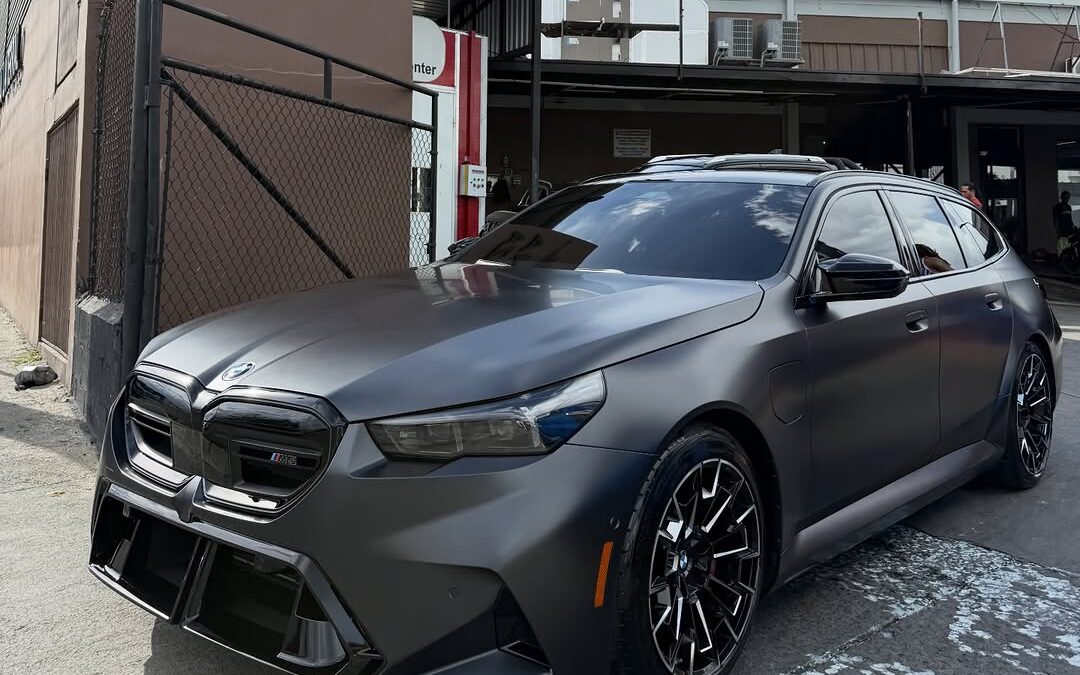
PPF (paint protection film) and ceramic coating solve two different problems: PPF is a physical layer that stops rock chips and scratches, while a ceramic coating is a liquid that adds gloss and makes paint easier to clean. PPF protects against impact; ceramic does not. For most owners the best answer is not one or the other — it’s PPF on high-impact panels with a ceramic coating on top. Here’s how to decide.
What is PPF?
Paint protection film is a thick, transparent urethane film applied over the paint. Premium film — like the TPU self-healing 7.5 mil gloss clear PPF we supply — is a genuine physical barrier. When a rock hits the panel, the film absorbs the impact instead of the paint. It also self-heals light scratches with heat. Full breakdown in our clear PPF guide.
What is a ceramic coating?
A ceramic coating is a liquid polymer (usually SiO₂-based) that bonds to the clearcoat and cures into a hard, glossy, hydrophobic layer measured in microns — a fraction of the thickness of PPF. It makes water bead and roll off, deepens gloss, and helps resist chemical stains and UV. What it does not do is stop a rock chip. A stone that would chip bare paint will still chip paint under a ceramic coating.
PPF vs ceramic coating: side by side
| Feature | Paint Protection Film (PPF) | Ceramic Coating |
|---|---|---|
| Rock chip & impact protection | Yes — physical barrier | No |
| Scratch resistance | Yes (self-healing) | Light only |
| Gloss / shine boost | Yes (gloss film) | Yes — strongest gloss |
| Hydrophobic / easy clean | Good | Excellent |
| UV & chemical stain resistance | Good | Excellent |
| Thickness | 7.5 mil | A few microns |
| Lifespan | 8–12 years | 2–5 years |
| Cost | Higher | Lower |
When to choose PPF
- You want to prevent rock chips on the hood, bumper and fenders
- You drive on highways, gravel, or behind trucks regularly
- You own a new, leased, or high-value car and want to protect resale value
- You want the strongest protection available on high-impact panels
When a ceramic coating makes sense
- You mainly want gloss and easy cleaning
- You want water and dirt to slide off with minimal washing
- You’re protecting panels that don’t take much impact (roof, trunk, lower doors)
- You want an affordable layer of chemical and UV protection
The best answer: use both
Serious owners rarely pick just one. The proven approach is PPF on the high-impact areas (front bumper, full or partial hood, fenders, mirrors, A-pillars) and a ceramic coating over everything — including over the film itself. You get the impact protection of PPF where rocks actually hit, plus the gloss and self-cleaning of ceramic across the whole car. Many premium ceramic coatings are formulated to bond over PPF specifically.
How long does each last?
Premium TPU PPF lasts 8 to 12 years; a ceramic coating typically lasts 2 to 5 years before it needs reapplication. That difference matters: PPF is a long-term investment, while ceramic is a maintenance layer you refresh. More on film lifespan in how long does PPF last.
Does ceramic coating replace PPF?
No. This is the most common misconception. A ceramic coating cannot stop a rock chip — it has no physical thickness to absorb impact. If chip protection is your goal, only PPF delivers it. Ceramic is a complement, not a substitute.
Frequently asked questions
Is PPF better than ceramic coating?
For impact and scratch protection, yes — PPF is the only product that physically stops rock chips. For gloss and easy cleaning alone, ceramic is cheaper and excellent. They do different jobs.
Can you put ceramic coating over PPF?
Yes, and it’s recommended. Ceramic over PPF adds gloss and hydrophobic, stain-resistant properties on top of the film’s impact protection.
Which is more expensive, PPF or ceramic?
PPF costs more because it’s a thicker material and a more labor-intensive install, but it lasts far longer and protects against damage ceramic can’t.
Do I need both PPF and ceramic coating?
Not required, but the combination gives the most complete protection: PPF on impact zones, ceramic everywhere for shine and easy maintenance.
Eternal Shields supplies premium TPU self-healing clear PPF (7.5 mil, gloss) to installers across the U.S. Message us on WhatsApp for roll pricing.